- WooCommerce the plugin is genuinely free. “Free WooCommerce hosting” is a different claim, and it is almost always marketing language for a free-tier web host that technically lets you install WooCommerce, not a host built to run one.
- WooCommerce officially requires a 256 MB PHP memory limit. Most free hosting plans cap out at 64-128 MB, half of the actual minimum.
- The most common real-world failure is not a slow site, it is silent: outbound email gets blocked on free tiers, so order confirmations and password resets simply never arrive.
- Free hosting is a legitimate choice for learning, testing, or a portfolio demo store. It is not a legitimate choice for a store that needs to take a real customer’s payment reliably.
Type “free WooCommerce hosting” into Google and the ads alone will convince you this is a solved problem. Half a dozen providers are apparently thrilled to host your online store for nothing. None of them mention, on that same page, that WooCommerce’s own documentation lists a minimum PHP memory limit of 256 MB, and that most free hosting plans give you somewhere between a quarter and half of that.
That gap is not an accident, and it is not really a secret either, it is just never stated plainly in one place. This article does that: what “free” actually refers to when a host uses that word next to “WooCommerce,” which specific technical limits break a real store rather than a test one, what a handful of genuinely free hosts actually offer today, and the honest situations where using one of them is a perfectly reasonable decision. If you’re evaluating free hosting for something other than a WooCommerce store, our broader guide to the best free web hosting providers covers the general PHP/MySQL, static-site, and managed-blog categories in more depth.
What “Free WooCommerce Hosting” Actually Means
There are two completely different things bundled into that phrase, and providers benefit when you do not separate them. WooCommerce itself, the plugin that turns a WordPress site into a store, is and always has been free to download and install. That part is not marketing, it is just true, and it is also not what most people mean when they search this phrase.
What they mean is: is there a web host that will run that store for zero rupees a month? The honest answer is yes, a small number of hosts offer a genuinely free tier that technically permits installing WooCommerce. But “permits installing” and “is built to run” are not the same claim, and the gap between them is where this whole topic actually lives.
How Hosts Turn “Free” Into a Marketing Hook
Search results for this keyword mix three genuinely different offers under one label, and knowing which one you are looking at saves a lot of wasted signup time.
- Genuine free-forever tiers. A small number of hosts (covered below) really do offer no-time-limit, no-credit-card free hosting where WooCommerce is not explicitly blocked. These are real, but built for small static sites and blogs, not stores.
- Time-limited free trials rebranded as “free hosting.” Several well-known hosting brands run 7 to 30-day free trials of a paid WooCommerce plan and market them with “free” in the headline. This is not free hosting, it is a sales funnel, and the store stops working the moment the trial ends unless a card is added.
- “Free” as a bundled add-on. Some providers advertise free hosting attached to a purchase you have to make anyway, a premium theme license or a paid plugin bundle, where the hosting is really a loss-leader to close a different sale.
None of these are dishonest exactly, but only the first category is actually “free WooCommerce hosting” in the sense most people searching this phrase mean.
The Real Technical Problem: WooCommerce Needs More Than Free Hosting Gives
This is the part almost no comparison article states with real numbers. WooCommerce publishes official minimum server requirements, and free hosting plans routinely fall short of them, not by a small margin.

- PHP memory limit. WooCommerce’s own documentation specifies 256 MB as the minimum. A typical free hosting plan offers 64-128 MB, meaning the store can install and even look fine in testing, then throw a memory exhaustion error the moment a real cart calculation, tax rule, or payment gateway plugin runs at checkout.
- PHP version and MySQL/MariaDB version. WooCommerce requires PHP 8.1 or higher and MySQL 8.0 or MariaDB 10.4 or higher. Free hosts frequently run older, fixed stack versions that cannot be changed by the account holder, since upgrading the environment is usually a paid-tier feature.
- SSL across the entire site. HTTPS is not optional for WooCommerce, payment gateways require it for PCI compliance and most will refuse to process a transaction without it. Free plans often provide SSL only on the host’s own subdomain, not on a connected custom domain, which is exactly the setup a real store needs.
What Actually Breaks When You Run a Real Store on Free Hosting
These are not theoretical risks, they are the specific, documented failure points that show up once a free-hosted WooCommerce install gets real traffic instead of test traffic.

- Outbound email gets blocked entirely. Several popular free hosts disable PHP’s
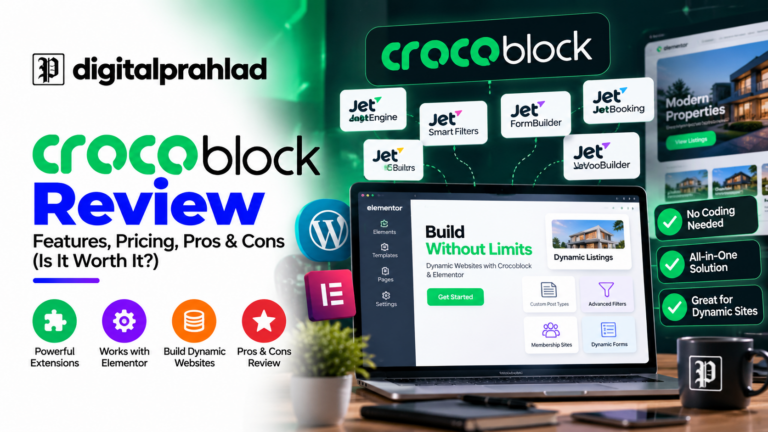
mail()function and block outbound SMTP connections at the server level to prevent spam abuse. WooCommerce depends on outbound email for order confirmations, shipping updates, and password resets, on an affected free host, all three fail silently. A customer can complete a purchase and never receive proof of it. - Inode limits get hit fast. “Inodes” count every individual file your account stores, not just disk space. WooCommerce, plus a typical page builder or plugin suite (see this Crocoblock review for an example) and a caching plugin, can push a site past 20,000 inodes quickly, and free plans commonly cap out around 30,000. Once that ceiling hits, new product images and uploads simply stop working.
- Daily hit or bandwidth caps get exceeded by normal traffic. A “hit” counts every individual HTTP request a page load generates, including every CSS file, script, and image, not just the page itself. A single WordPress page load can generate 40 to 80 hits, so a modest 500 to 700 daily visitors can exceed a 30,000-hit daily cap before the day is even over, taking the store offline during exactly the traffic it needed.
- Cron-dependent features silently stop firing. Scheduled sales, subscription renewals, and abandoned cart follow-ups rely on WordPress’s cron system running reliably. Free hosts frequently throttle or disable true cron execution, so these features appear configured correctly in the dashboard while quietly never actually running.
- Payment gateways refuse to activate on a subdomain. Razorpay, one of the most widely used gateways for Indian stores, requires every merchant account to whitelist a verified, registered domain before it will process a single transaction. A free host’s default yourstore.freehostbrand.com subdomain either fails that verification outright or forces a workaround most beginners never figure out, meaning checkout can be fully built and still unable to take a real payment. If you are considering crypto as an alternative or addition to Razorpay, our comparison of crypto payment gateways in India covers the compliance side most guides skip.
Real Free WooCommerce Hosting Options (What Actually Exists Today)
Setting the marketing aside, here is what genuinely free, no-time-limit hosting looks like right now, and where each one actually breaks for a real store.
| Provider | Real Limitation for WooCommerce | Honest Use Case |
|---|---|---|
| InfinityFree | 128 MB PHP memory (half of WooCommerce’s own minimum), outbound email fully blocked, 30,000 daily hit cap, 30,000 inode ceiling | Learning WooCommerce, a demo store with no real orders |
| GoogieHost (free tier) | Free plan is built for blogs and small sites, not documented or optimized for WooCommerce’s resource profile | A portfolio or pre-launch coming-soon page, not a live store |
| 000webhost | Discontinued. Hostinger shut the service down and migrated remaining users to paid Hostinger plans. | No longer applicable, listed here because it still ranks in “best free hosting” searches |
Notice what is missing from this list: no major, recognizable hosting brand offers a genuinely free, permanent WooCommerce-ready plan. The “free” options that exist are small, ad-supported or resource-capped hosts never marketed specifically as ecommerce infrastructure, because building infrastructure that can absorb real WooCommerce load costs the provider real money, and nobody gives that away indefinitely.
Hidden Costs That Make “Free” Not Actually Free
- A domain name is not included. Every free host puts your store on a subdomain like yourstore.freehostbrand.com by default. A real domain, needed for any store customers will trust with a card number, is a separate annual cost regardless of how free the hosting itself is.
- SSL on your actual domain often requires an upgrade. Free SSL frequently covers only the host’s subdomain, connecting a real custom domain and getting HTTPS working on it is commonly a paid-tier feature.
- Backups are rarely included. If a free host’s shared server has an issue, or your account gets suspended for exceeding a limit, there is often no backup to restore from, since automated backups are almost universally a paid add-on.
- Forced ads or branding. Several free hosts inject their own ads or a “powered by” footer badge onto your site, which is a strange thing to show a customer who is about to enter payment details.
Add these up against a genuinely budget-priced real host, and the gap is smaller than the word “free” implies:
| Cost Item | “Free” Hosting Route | Budget Real Hosting Route |
|---|---|---|
| Hosting | ₹0/mo, but resource-capped | ~₹59-150/mo |
| Domain name | Required separately either way, ~₹700-900/yr | Required separately either way, ~₹700-900/yr |
| SSL on your real domain | Often a forced upgrade to get working | Included |
| Working order emails | Not guaranteed, sometimes fully blocked | Included |
| Approx. first-year total | ₹700-900 domain, plus an eventual forced migration once limits hit | ₹1,400-2,700 domain and hosting combined |
The realistic gap between “free” and a real store that can actually take a payment is often under ₹2,000 for the first year, less than what most stores lose in a single missed order because a confirmation email never arrived.
When Free WooCommerce Hosting Actually Makes Sense
None of this makes free hosting a scam, it makes it a tool with a narrower job than the marketing implies. It is a genuinely reasonable choice when:
- You are learning WooCommerce for the first time and want a real install to click around in, not just documentation screenshots.
- You are prototyping a store’s design and product catalog before committing to a paid plan and a domain purchase.
- You are building a portfolio piece to show a client or employer what a WooCommerce build looks like, with no real transactions ever processed.
- You are testing a specific plugin or theme’s compatibility with WooCommerce in an isolated environment before installing it on a live site.
In every one of these cases, the free tier’s limits are irrelevant because you were never going to hit them, no real customer traffic, no real payment volume, no real order emails that need to arrive.
What to Use Instead If You Are Actually Selling
The moment a store needs to take one real payment reliably, the calculation changes, and the good news is the realistic alternative is not expensive. Budget WordPress hosting built for actual traffic starts well under a dollar a day on several India-based hosts we have tested directly, with the 256 MB-plus memory limits, working outbound email, and sitewide SSL that a free tier cannot offer. Our comparison of the best web hosting providers in India breaks down real starting prices, data center locations, and which of those providers are actually India-owned rather than global brands with a local server.
If you started on free hosting to learn and are now ready to move a working store onto a real plan, that migration is more mechanical than risky as long as you follow the right order of operations, our guide to migrating WordPress to a new host covers exactly that process without losing your product catalog or existing orders. If you’re selling to a US audience specifically, our best cloud hosting providers in USA guide covers cloud VPS options with real isolated resources a store outgrowing free hosting actually needs.
5 Best Paid WooCommerce Hosting Providers
These five actually meet WooCommerce’s own minimum requirements out of the box, rather than making you discover the gap after launch. They span budget to premium and India-based to global, all verified against their current published specs rather than a generic shared-hosting plan repackaged with a WooCommerce logo.
| Provider | Starting Price | Storage / Resources | Data Center | Best For |
|---|---|---|---|---|
| Hostinger | $3.99/mo (Business plan) | 200 GB NVMe SSD, free domain and SSL, 0% transaction fees | Mumbai available among global locations | First WooCommerce store on a real budget |
| Cloudways | ~₹800/mo ($10/mo) | Managed cloud on DigitalOcean/AWS, auto-scaling, built-in CDN and Redis cache | Mumbai DC selectable | Growing stores that need managed infrastructure without a sysadmin |
| Bluehost | $14.99-21.99/mo (WooCommerce plans) | NVMe storage, WooCommerce pre-installed, storefront theme included | Global, primarily US-based | Store owners who want WordPress.org’s officially recommended host |
| Ultahost India | ₹399/mo | NVMe SSD VPS, WooCommerce-tuned server configuration, 99.99% uptime SLA | Mumbai | Indian D2C stores expecting real traffic and sale-day spikes |
| YouStable | ₹59/mo (Starter), ₹149/mo (Business) | SSD storage, LiteSpeed on higher plans, GST invoice and INR billing included | Mumbai, NOIDA | The cheapest real option that still clears WooCommerce’s minimum requirements |
Every plan on this table includes the three things a free tier withheld throughout this article: enough PHP memory to survive a real checkout, working outbound email, and SSL on your actual domain rather than a subdomain. That combination, not the brand name, is what actually determines whether a store stays online.
Common Mistakes People Make Chasing Free WooCommerce Hosting
- Testing only with a few products and no real checkout attempt. Memory exhaustion and email failures often only surface once a real payment gateway plugin and a full cart calculation run together, not during a light demo.
- Not testing whether order confirmation emails actually arrive. This is the single most common free-hosting failure that goes unnoticed until a customer complains they never got a receipt.
- Assuming a “free trial” is the same as free hosting. Building a real catalog during a time-limited trial, then losing access to it entirely when the trial ends and no card is on file, is a completely avoidable and very common mistake.
- Ignoring the domain and SSL cost while comparing “free” options. A fair comparison has to include what it actually costs to get a real domain and working HTTPS on top of the “free” hosting, since that total is what determines whether it was ever really free.
Frequently Asked Questions
Is WooCommerce actually free to use?
Yes. WooCommerce the plugin is free to download and install on any WordPress site with no license fee. The costs that add up around it, hosting, a domain name, a payment gateway’s transaction fees, and any premium extensions, are separate from WooCommerce itself and are what most stores actually spend money on.
Can you really run a WooCommerce store on free hosting?
You can install it, and it will often run fine in testing. Running it reliably for real customers is a different question, WooCommerce’s official minimum PHP memory requirement is 256 MB, while most free hosting plans offer 64 to 128 MB, and several free hosts block outbound email entirely, which breaks order confirmations.
Why do order confirmation emails fail on free WooCommerce hosting?
Many free hosts disable PHP’s mail() function and block outbound SMTP connections at the server level to prevent their shared infrastructure from being used for spam. WooCommerce relies entirely on outbound email for order confirmations, shipping updates, and password resets, so on an affected host, all of these fail silently with no visible error to the store owner.
What is the best genuinely free WooCommerce hosting option?
InfinityFree is currently the closest thing to a genuinely free, no-time-limit host that technically permits WooCommerce, though its 128 MB PHP memory limit, blocked outbound email, and 30,000 daily hit cap make it suitable only for learning or demo purposes, not a live store taking real orders.
Is free WooCommerce hosting a scam?
No, but it is frequently mismarketed. Genuine free-forever tiers exist and are honest about being resource-limited, the more misleading pattern is hosts labeling a time-limited free trial of a paid plan as “free hosting,” which stops working entirely once the trial period ends unless payment is added.
Will payment gateways even work on free WooCommerce hosting?
Often not reliably. Razorpay, one of the most widely used gateways for Indian stores, requires merchants to whitelist a verified, registered domain before it will process transactions, and a free host’s default subdomain frequently fails that verification. Even when a gateway technically connects, the missing SSL and blocked outbound email common on free tiers still undermine the checkout and order-confirmation flow around it.
Final Verdict: Real or Marketing Trick?
Both, depending on which claim you are actually evaluating. “WooCommerce is free” is completely real, that part of the sentence is not marketing at all. “Free hosting can run your WooCommerce store” is the part doing the marketing work, and it is technically true in the narrowest possible sense, in the same way a bicycle can technically merge onto a highway. It will move, right up until it needs to do something the free tier was never built to handle: a real memory-heavy checkout, an order confirmation email, a traffic spike on your best sales day.
Use free hosting for exactly what it is good at, learning, prototyping, and demoing, and budget for real hosting the moment actual money is meant to change hands through your store. That threshold usually costs less than people assume, often under a dollar a day, which makes “I could not afford real hosting” a much weaker excuse than “the free option looked easier to start with.” When you’re ready to make that jump, our managed WooCommerce hosting comparison covers 10 real providers fact-checked against their own pricing.
Once your hosting is actually sorted, the next real lever is what you run on top of it, our 12 best free WooCommerce extensions guide covers the free payment gateways, cart recovery, and shipping tools worth installing before you pay for anything.
Tell Google you want more of this.
Add DigitalPrahlad as a preferred sourceOne tap, and this site shows up more often in your own Google Top Stories, AI Overviews, and AI Mode results. You can remove this preference anytime you'd like.
Affiliate Disclaimer: This website is reader-supported. Some links are affiliate links, meaning I may earn a small commission at no extra cost to you. I only recommend products and tools I genuinely trust and use myself. Your support keeps DigitalPrahlad free and practical.